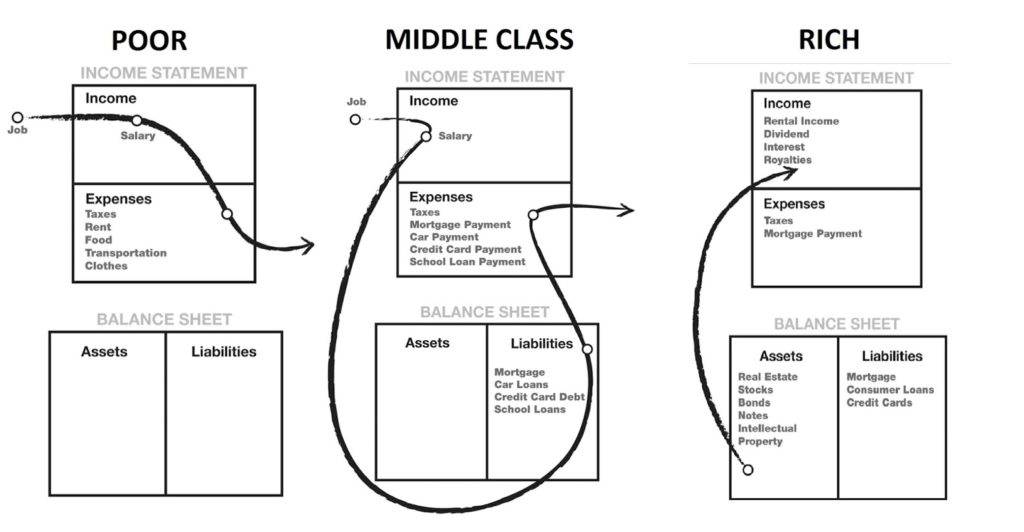
Personal Finance Couse for Best Outcome of the Income Plan
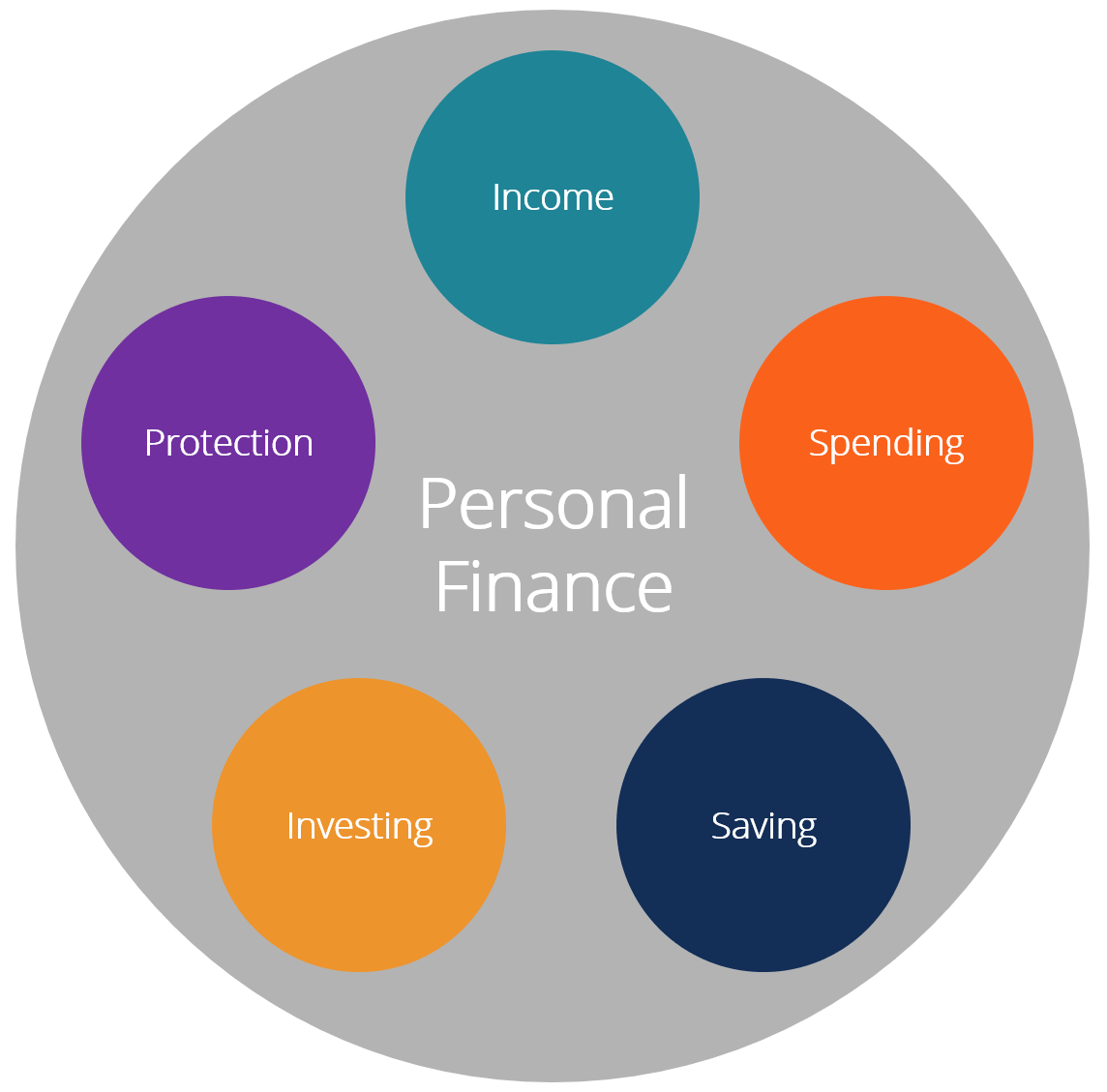
Sometimes, each of us asked:
Why some people are more healthy or successful than others?
Success is having good results like sufficient income and meaningful outcome.
1 What is your income? You gain in exchange for goods and services! Most of the times this gain can be financial in fiat currency or legal tenders, with a fictive value, without real value like material and intellectual propriety. Will you see whatever income you get as being enough at the time you get it? Will you ask God and work diligently whenever it seems that you need more? Will you learn better home steading and free trade?
2 Is is written (in Matthew 6:24) No man can serve two masters: for either he will hate the one, and love the other; or else he will hold to the one, and despise the other. You cannot serve God and mammon (meaning wealth, riches, money). Will you decide to serve Yehovah (God the Creator) and not for riches (as His creation)? Avoid worldly lusts to work jobs only for money! Work together as a family on your farm and have food and products to freely trade. In all times people needs are mainly food and shelter.
3 Which are the essencial goods and services for living? Fresh food, clothing and shelter, along with survival skills like learning, teaching, communication (persuation, negotiation), training, trading (buying and selling). You can get all these in your homestead through homeschooling. Now all the useful information is free on the internet. For all the details on preparedness (survival) hear the Letter for Servants.
4 It is written (in Matthew 13:12) For whoever has, to him shall be given, and he shall have more abundance: yet whoever has not, from him shall be taken away even that he has. Will you see what you already have? Will you set how much is enough? Will you be grateful for what you have? Be grateful, because even if it is only a little, this little can grow! Or you want to loose what you already have? Use it or lose it.
5 Some key ideas in financial education:
a. Say, How can I affort it? instead of, I cannot affort it! Remember, money is an idea.
b. How can I be free financialy (retire) at 30 years old? You will still continue to work until you die, yet just for contribution not for expenses. Job is dependence, business is independence, assets is freedom.
c. Wealth is measured in time and not money. How much time do you have (based on your wealth and assets), that you can live (serving God in His kingdom) without working for an income that will cover expenses?
6 What you can righteously do with every income you get? Split your household income in four parts as contribution, investment, expenses, savings.
7 What is contribution? Giving the first fruits to God. Why? Because everything we have is from Him. Where to offer? Money in the collection from the local church meetings (assembly, gathering, congregation). Besides that you can also contribute with care like food, clothing, shelter. How are usually used these resources? Needs of the fellowship and then for the poor and needy. How much to give? At least ten percent (10%) of the income. If you give between a quarter and half of your income you are being generous. If you give more than half of your income, then you are sacrificially giving. Your level of spirituality is often connected with how much you offer from the income you receive. One spiritual goal can be to give as contribution percentage your age! Make this challenge to reach 100 years old and so you will give all to God!
8 It is written (in Mar 12:41-44, Luke 21:1-4) Jesus sat down opposite the treasury, and observing how the people were putting money into the treasury; and many rich people were putting in large sums. A poor widow came and put in two coins. Calling His disciples to Him, He said to them, Truly I say to you, this poor widow put in more than all the contributors to the treasury; for they all put in out of their abundance (surplus), but she, out of her poverty, put in all she owned, all she had to live on.
9 It is written (in 2 Cor 8:2-5, 9:5-12) In a great trial of affliction the abundance of their joy and their deep poverty abounded unto the riches (overflowed in the wealth) of their liberality (generosity). I testify (bear record) that according to their power (ability), and beyond their ability (power), they gave of their own accord, begging us with much urging for the gift (favor) of fellowship (participation) in the support (ministering) of the saints, and this, not as we had hoped (expected), but they first gave themselves to the Lord and to us by the will of God.
So I thought it necessary to urge the brethren that they would go on ahead to you and arrange beforehand your previously promised bountiful gift, so that the same would be ready as a bountiful gift and not affected by covetousness. I say this, he who sows sparingly will also reap sparingly, and he who sows bountifully will also reap bountifully. Each one just as he has purposed in his heart, not grudgingly or under compulsion (necessity), for God loves a cheerful giver. And God is able to make all grace abound to you, so that always having all sufficiency in everything, you may have an abundance for every good work (deed); as it is written: “He scattered abroad, He gave to the poor, His righteousness endures forever. Now He who supplies seed to the sower and bread for food will supply and multiply your seed for sowing and increase the harvest of your righteousness; you will be enriched in everything for all liberality (bountifulness), which through us is causing (producing) thanksgiving to God. For the administration (ministry) of this service is not only fully supplying the (want) needs of the saints, but is also overflowing (abundant) through many thanksgivings to God.
10 It is written (in Mal 3:8-10) Will a man rob God? Yet you are robbing Me! But you say: How have we robbed You? In tithes and offerings. You are cursed with a curse, for you are robbing Me, the whole nation! Bring the whole tithe into the storehouse, so that there may be food in My house, and prove (test) Me now in this, says the LORD Yehovah of hosts, if I will not open for you the windows of heaven and pour out for you a blessing until it overflows (enough).
11 What is investment? Something that will bring (back more) income. Always seek new investments and ask what return will this bring back? Which are the best investments? Real estate propriety like fertile land with water and touristic opportunities. Intellectual propriety like inspirational church music or motivational development books. Learn from the parable in Matthew chapter 21.
12 What is expenses? Paying for needs like food and shelter. If expenses are greater than your contribution and investment, you need to consider your work and improve or start something new.
13 What is savings? What remain after contribution, investment and expenses. The savings will soon or later go in one of the other three areas. The best place to keep saving is as food provisions (for preparedness survival), products that can be used in the household with extended shelf life, investment in assets like land or companies that are serving the public needs.
14 What is the best thing you do in secret? Charity; giving to the needy. It is written (in Matthew 6:4) Your giving (alms) may be in secret: and your (heavenly) Father which sees (what is done) in secret, Himself shall reward you openly.
15 Do you want a constant balance in your character to remain humble and honorable? Fasting is the key! What is fasting? When you replace eating food and drinking water with doing good deeds for other people.
16 It is written in (Isa 58:4-11) Behold, you fast for contention and strife and to strike with a wicked fist. You do not fast like you do today to make your voice heard on high. Is it a fast like this which I choose, a day for a man to afflict his soul (and humble himself)? Is it for bowing one’s head like a reed And for spreading out sackcloth and ashes as a bed? Will you call this a fast, even an acceptable day to the LORD Yehovah? Is this not the fast which I choose: To loosen the bonds of wickedness, To undo the bands of the yoke, And to let the oppressed go free and break every yoke? Is it not to divide your bread with the hungry, and bring the (homeless) poor into the house; when you see the naked, to cover the naked; and not to hide yourself from your own flesh? Then your light will break out like the dawn, and your health (recovery) will speedily spring forth; and your righteousness will go before you; the glory of the LORD Yehovah will be your rear guard (reward). Then you will call, and the LORD Yehovah will answer; you will cry, and He will say: Here I am. If you remove (take away) the yoke from your midst, the pointing of the finger and speaking wickedness (vanity), and if you give yourself to the hungry, and satisfy (the desire of) the afflicted, then your light will rise in obscurity (darkness), and your gloom will become like midday (noonday). And the LORD Yehovah will continually guide you, and satisfy your desire in drought (scorched places), and give strength to your bones; and you will be like a watered garden, and like a spring of water whose waters do not fail.
17 Fast every week. Pick a day and live like you are poor and needy, without food, shelter, money, etc. Do you want the ultimate financial challenge? Sell everything, give to the needy and move in another country to teach another nation to fulfill everything Jesus commanded while seeking the kingdom of God and His righteousness by faith. Because it is written (in Romans 1:17) the just (or righteous) shall live by faith.
18 Finaly it is written (in Hebrew 13:4-6) Marriage is honourable in all, and the bed undefiled: but whoremongers and adulterers God will judge. Conversation be without covetousness; and be content with such things as you have: for He has said, I will never leave you, nor forsake you. So that we may boldly say, The Lord is my helper, and I will not fear what man shall do to me. Will you trust the Lord God? Will you be honorable in your marriage? Will you be content? Thank you for keeping your marriage honorable and content!
How to Have a Healthy Relationship with Money
We live in a culture that tells us having more is better. Our tendency as sinful human beings is to want more money, a bigger house, a newer phone, and more expensive possessions. If we’re trying to find our happiness in money, we’ll never be satisfied.
Before we can steward what God gives us, we need to have a healthy relationship with money. Christians are called to contentment with what God has given them in each stage of life. Take a look at these bible verses about managing finances.
1. Whoever loves money never has enough (Ecclesiastes 5:10)
“Whoever loves money never has enough; whoever loves wealth is never satisfied with their income. This too is meaningless.”
2. It is God who gives you the ability to produce wealth (Deuteronomy 8:18)
“But remember the LORD your God, for it is he who gives you the ability to produce wealth, and so confirms his covenant, which he swore to your ancestors, as it is today.”
3. You cannot serve God and money (Matthew 6:24)
“No one can serve two masters, for either he will hate the one and love the other, or he will be devoted to the one and despise the other. You cannot serve God and money.”
4. Don’t be greedy for money (1 Peter 5:2)
“Be shepherds of God’s flock that is under your care, serving as overseers-not because you must, but because you are willing, as God wants you to be; not greedy for money, but eager to serve;”
5. Whoever is greedy troubles his household (Proverbs 15:27)
“Whoever is greedy for unjust gain troubles his own household, but he who hates bribes will live.”
How to Properly Steward What God Has Given You
Scripture reminds us that God ultimately owns everything here on earth. Our job is to responsibly steward the resources that God has given us. We also have the opportunity to bring God glory through the ways that we manage our finances.
In these Bible verses about managing finances, we see some main principles:
God blesses those who make money through honest work rather than sinful practices.
God calls us to pay back what we owe and help those who have helped us.
It’s wise for us to plan, think through how we’ll make money, and spend money.
Saving money can help set us up for future financial success.
6. Dishonest money dwindles away (Proverbs 13:11)
“Dishonest money dwindles away, but whoever gathers money little by little makes it grow.”
7. Pay what you owe to others (James 5:4-6)
“Look! The wages you failed to pay the workers who mowed your fields are crying out against you. The cries of the harvesters have reached the ears of the Lord Almighty. You have lived on earth in luxury and self-indulgence. You have fattened yourselves in the day of slaughter. You have condemned and murdered the innocent one, who was not opposing you.”
8. A wise man thinks ahead (Proverbs 13:16)
“A wise man thinks ahead; a fool doesn’t, and even brags about it!”
9. The plans of the diligent lead to profit (Proverbs 21:5)
“The plans of the diligent lead to profit as surely as haste leads to poverty.”
10. Sit down and estimate the cost (Luke 14:28)
“Suppose one of you wants to build a tower. Won’t you first sit down and estimate the cost to see if you have enough money to complete it?
11. It is wise to store up wealth (Proverbs 30:24-25)
“Four things on earth are small, yet they are extremely wise: Ants are creatures of little strength, yet they store up their food in the summer;”
12. Provide for your household (1 Timothy 5:8)
“But if anyone does not provide for his own, and especially for those of his household, he has denied the faith and is worse than an unbeliever.”
13. Be not one of those who give pledges (Proverbs 14:23)
“Be not one of those who give pledges, who put up security for debts. If you have nothing with which to pay, why should your bed be taken from under you?
Dive more into what God-honoring stewardship looks like in our blog post: Stewardship and Giving, What’s the Difference?
What The Bible Says About Tithing and Giving
God calls us to live generously through tithes and offerings. Tithing is an intentional practice to remind us of God’s sovereign ownership of all we have. It can be easy to go through the motions, so we need to intentionally decide how we want to use our resources to further His kingdom and take care of others.
14. God loves a cheerful giver (2 Corinthians 9:6-8)
“Now this I say, he who sows sparingly will also reap sparingly, and he who sows bountifully will also reap bountifully. Each one must do just as he has purposed in his heart, not grudgingly or under compulsion, for God loves a cheerful giver. And God is able to make all grace abound to you, so that always having all sufficiency in everything, you may have an abundance for every good deed;”
15. Do not be hardhearted or tightfisted (Deuteronomy 15:7)
“If anyone is poor among your fellow Israelites in any of the towns of the land the LORD your God is giving you, do not be hardhearted or tightfited toward them.”
16. It is more blessed to give than to receive (Act 20:25)
“In all things I have shown you that by working hard in this way we must help the weak and remember the words of the Lord Jesus, how he himself said, ‘It is more blessed to give than to receive.’”
17. When you give to the needy, do not announce it (Matthew 6:2-5)
“So when you give to the needy, do not announce it with trumpets, as the hypocrites do in the synagogues and on the streets, to be honored by others. Truly I tell you, they have received their reward in full. But when you give to the needy, do not let your left hand know what your right hand is doing, so that your giving may be in secret. Then your Father, who sees what is done in secret, will reward you.”
18. I will give a full tenth to you (Genesis 28:20-22)
“Then Jacob made a vow, saying, “If God will be with me and will keep me in this way that I go, and will give me bread to eat and clothing to wear, so that I come again to my father’s house in peace, then the Lord shall be my God, and this stone, which I have set up for a pillar, shall be God’s house. And of all that you give me I will give a full tenth to you.”
If you want to dig deeper into what scripture has to say about tithing, head to our blog post: 20 Bible Verses about Tithing and Offerings.
As you share bible verses about managing finances and giving, it’s important to remove any barriers that are keeping your church from living generously. By improving the process of giving and making it simple for donors to give regularly, your church will see more dependable generosity all year round. Whether it’s online, mobile, or text giving, Pushpay has all the giving solutions you could ever need.
How to Manage Money in Times of Abundance
It can be easy to fixate on our wealth in this uncertain world, thinking it can solve our problems. Wealth can be a gift from God, and we can use it to bring Him glory when appropriately managed. In times of prosperity, God calls us to be generous and ready to share with those who have less. By being generous and rich in good works, we store up the treasure of a good foundation for the future.
19. Honor the Lord from your wealth (Proverbs 3:9-10)
“Honor the LORD from your wealth and from the first of all your produce; So your barns will be filled with plenty and your vats will overflow with new wine.”
20. It is a good thing to receive wealth from God (Ecclesiastes 5:19)
“And it is a good thing to receive wealth from God and the good health to enjoy it. To enjoy your work and accept your lot in life—this is indeed a gift from God.”
21. We will bring our firstfruits to the Lord (Nehemiah 10:35)
“We obligate ourselves to bring the firstfruits of our ground and the firstfruits of all fruit of every tree, year by year, to the house of the LORD.”
22. Don’t fix your hope on the uncertainty of riches (1 Timothy 6:17-19)
“Instruct those who are rich in this present world not to be conceited or to fix their hope on the uncertainty of riches, but on God, who richly supplies us with all things to enjoy. Instruct them to do good, to be rich in good works, to be generous and ready to share, storing up for themselves the treasure of a good foundation for the future, so that they may take hold of that which is life indeed.”
How to Trust God in Times of Financial Need
In the Bible, there are many accounts of God providing for those in need. We see God provide food for Israel in the wilderness, for Elijah during a drought, for Samaria during a time of famine. We also see God providing money, healing, comfort, and protection. In times of need, we aren’t promised that God will give us wealth and riches. But we see in these bible verses about managing finances that God will supply the needs of his people.
23. God will supply all your needs (Philippians 4:19)
“And my God will supply all your needs according to His riches in glory in Christ Jesus.”
24. Open your mouth wide, and I will fill it (Psalms 81:10)
“I am the Lord Your God, who brought you up out of the land of Egypt. Open your mouth wide, and I will fill it.”
25. God clothes the grass of the field, how much more will he clothe you (Luke 12:28)
“If that is how God clothes the grass of the field, which is here today, and tomorrow is thrown into the fire, how much more will he clothe you—you of little faith!”
When we approach money with the right attitude and look to God’s Word as a source of guidance, we can learn to manage our finances in a way that brings glory to God.